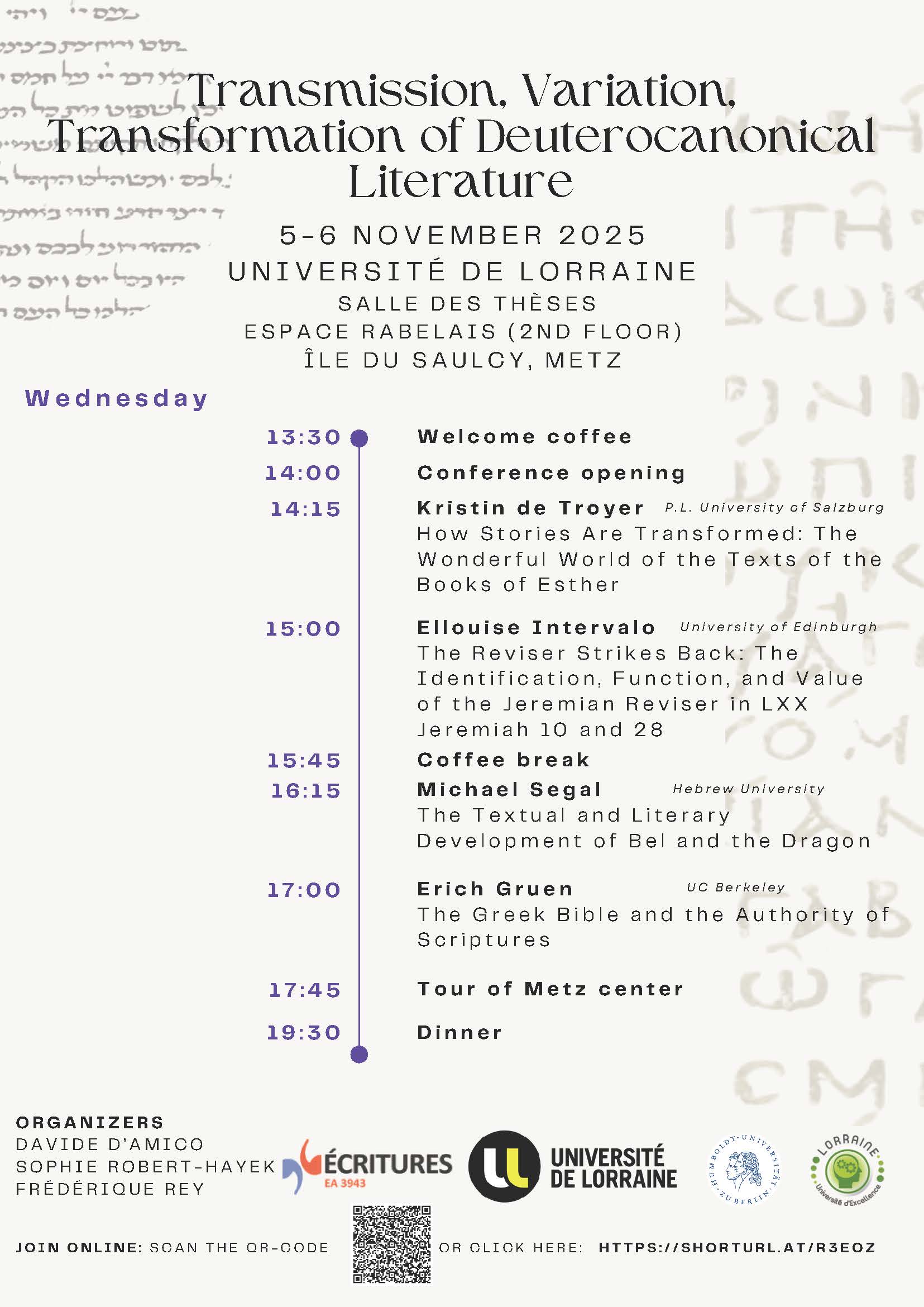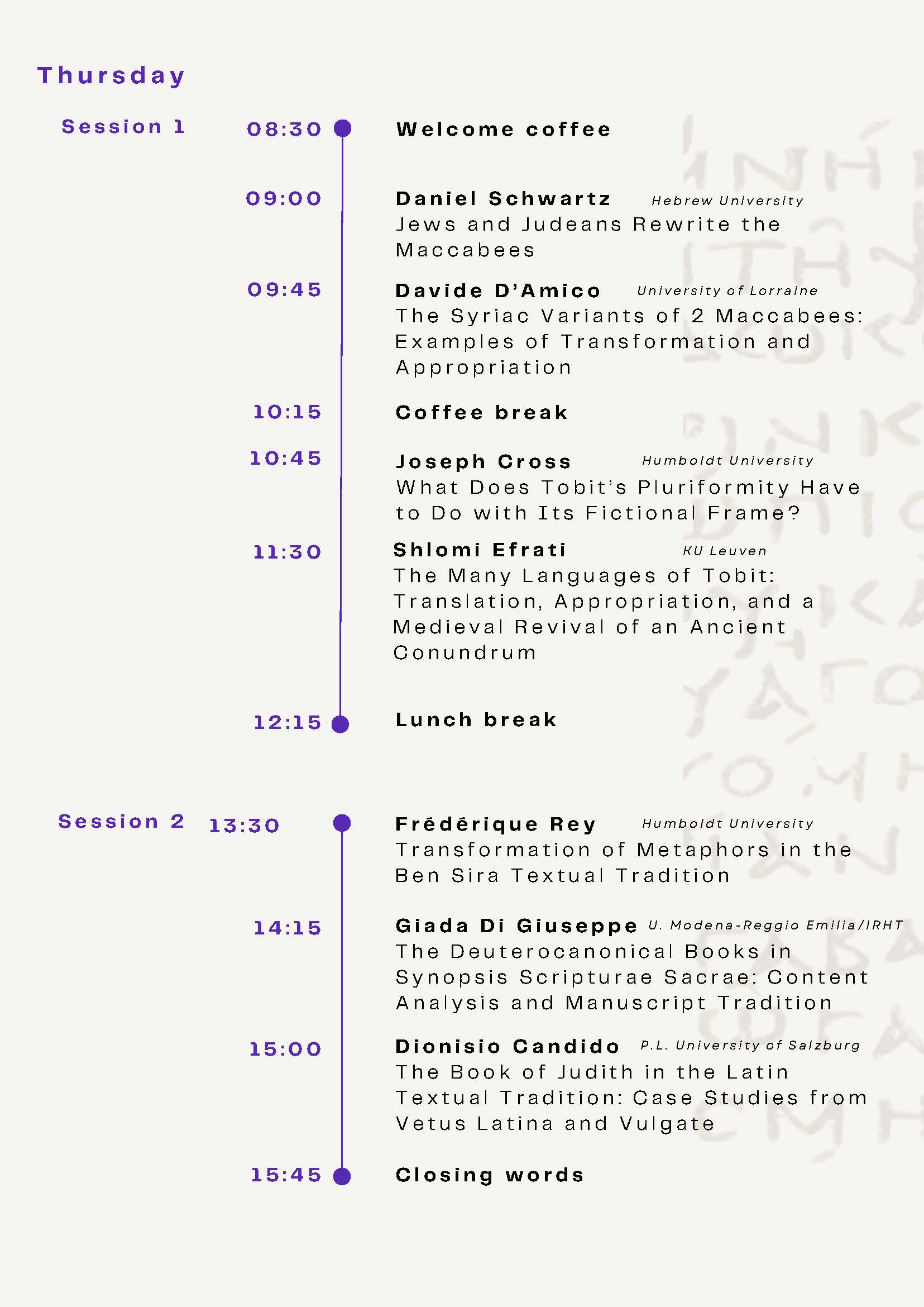
Transmission, Variation, Transformation of Deuterocanonical Literature
The manuscripts of the Greek Bible include several books that, for historical reasons, were not included in the Hebrew Bible. These so-called ‘deuterocanonical’ books (or “apocrypha”) form a diverse corpus expressing different genres, from narratives to didactic and sapiential texts. Recent studies have moved beyond analyzing these texts solely in relation to the New Testament background, now examining them as integral expressions of the cultural, literary, religious, and political milieu of Second Temple Judaism. Although the early rabbinic tradition did not assign these texts the same significance that they later held in the Christian tradition, the history of their transmission testifies to how Jewish communities considered them an integral part of Israel's cultural heritage. At the same time, the dynamism of the forms and modes by which these texts were transmitted and received in late antiquity, the Middle Ages, and early modernity reveals a vibrant tradition that offers new perspectives for inquiry into the linguistic, historical, and religious context in which they were produced and received.